
By Aisha Tasneem Aliyu
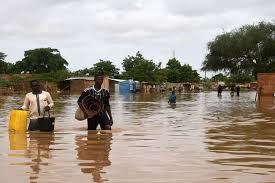
Each rainy season in Kano comes with a familiar struggle roads transforming into streams, cars and tricycles stranded in water, and residents wading through dirty floodwaters. What was once considered a seasonal inconvenience has now become a persistent urban challenge, especially for motorists and pedestrians navigating some of the city’s busiest roads.
In several parts of the metropolis, rainfall often leads to severe traffic congestion and delays, disrupting daily activities and exuposing road users to safety risks. Areas such as Janbulo, Kofar Na’isa, and Gwale are among the most affected, with residents saying the situation worsens every year.
According to Malam Bello, a resident of Janbulo, flooding frequently forces vehicles into a single lane. “When it rains in Janbulo, all vehicles are forced to use one lane because floodwater blocks the other lanes,” he explained. He added that the situation creates confusion on the road, as drivers struggle to navigate narrow spaces, increasing the chances of accidents and vehicle damage.
Kofar Na’isa, another major road linking several communities, faces similar challenges. Residents lament that persistent flooding has led to the rapid deterioration of the road surface. One road user complained, “Kofar Na’isa, being one of the main roads, becomes very poor during rainfall. Most people park their vehicles because the road gets so bad, and it often results in vehicle breakdown.” He noted that the cost of repairing vehicles damaged by floodwater places additional financial strain on commuters.
Floading also affects pedestrians and traders who rely on roadside movement for their daily livelihoods. Many residents say they are forced to walk through dirty water, exposing themselves to health risks. A petty trader in Gwale, who preferred not to be named, said, “Sometimes customers don’t come out when everywhere is flooded. Even moving from one place to another becomes very difficult.”
Environmental experts have linked the recurring flooding to poor drainage systems and indiscriminate waste disposal. A civil engineer explained that many drainage channels across the city are either poorly constructed or blocked with refuse. “The major cause of flooding in Kano is poor drainage and indiscriminate dumping of waste. Most of the drainage channels are blocked, and when the rain comes, there is no passage for water,” he said.
Adding to this concern, a health officer warned that stagnant floodwater could lead to outbreaks of waterborne diseases. “When floodwater stays for days, it becomes a breeding ground for mosquitoes and bacteria, increasing the risk of malaria, cholera, and other infections,” the officer noted, urging residents to take environmental sanitation seriously.
Community members believe that the flooding problem can be reduced if both the government and residents take responsibility. Hauwa Abdullahi, a resident of Gwale, stressed the need for cooperation. “We need government to repair the bad roads and clear the drainage regularly, but residents must also stop throwing dirt inside the gutters. If both sides cooperate, the flooding problem can reduce,” she said.
As the rainy season continues, the voices of road users, traders, experts, and residents echo the same plea: improved infrastructure, proper waste management, and effective urban planning to ease the burden of flooding in Kano. Until these issues are adequately addressed, navigating the city during heavy rains will remain a daunting task for many residents